
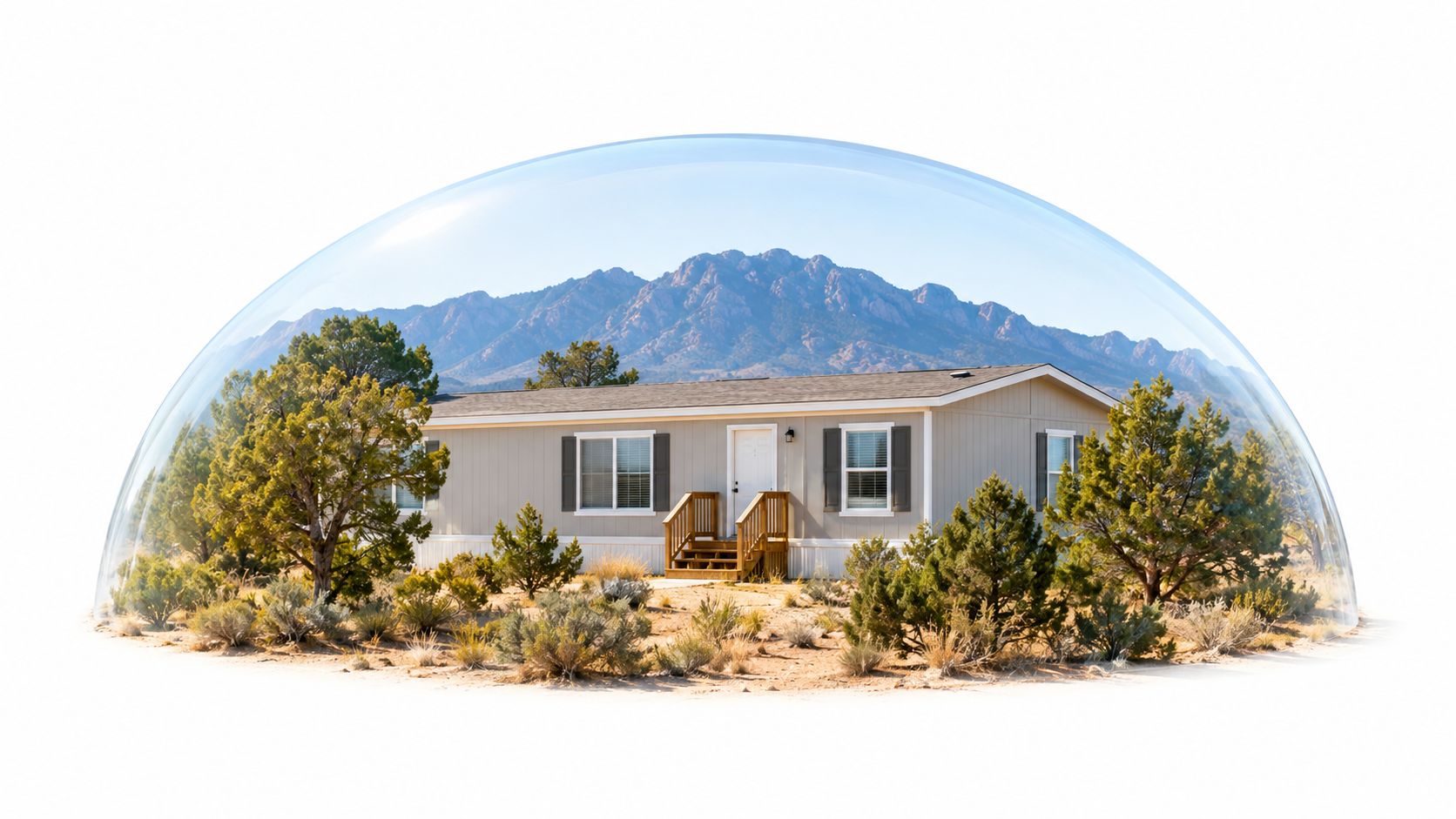
If you're sitting at a closing table with a binder request in one hand and a photo of the home's HUD tag in the other, you're already in the part most New Mexico home insurance articles skip. A manufactured home doesn't move through insurance the same way a site-built house does.
In this state, that difference shows up fast. A single-wide on leased land outside Belen can be underwritten one way, while a double-wide on a permanent foundation near Ruidoso gets treated very differently. Same state. Same buyer. Different risk story.
Why New Mexico Home Insurance Looks Different for Manufactured Homes
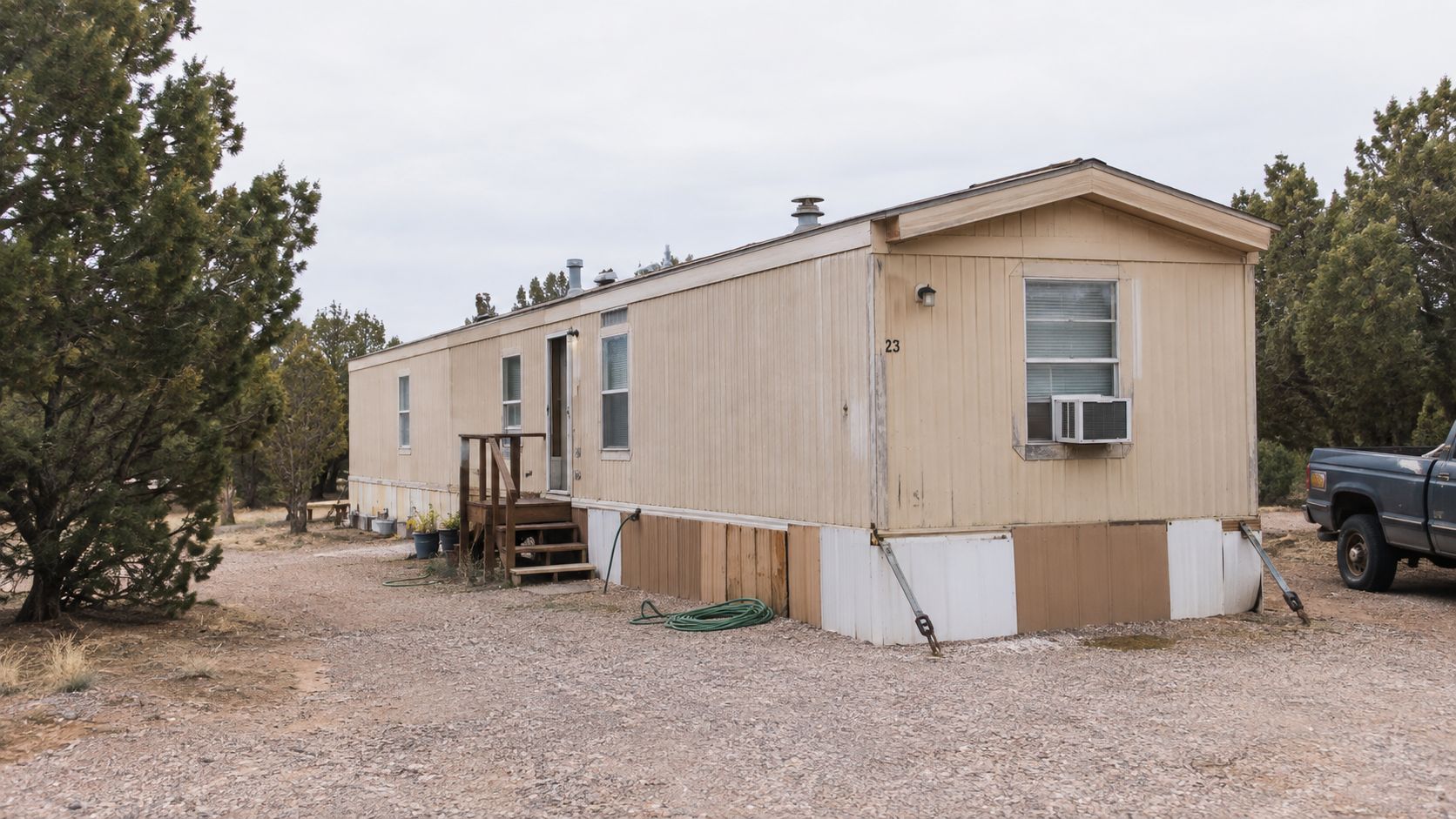
A lot of New Mexico buyers are looking at homes that don't fit the standard homeowners script. Think of a 1995 single-wide in Valencia County, tie-downs added after a retrofit, porch out front, gravel drive, piñon and juniper close to the skirting. The lender wants proof of coverage. The seller says the roof was replaced "a while back." The buyer assumes home insurance is home insurance.
It isn't.
Why the home itself changes the quote
For manufactured homes, carriers usually care about details that many buyers don't have ready on day one.
They want the year built, the HUD certification label, the roof age, the tie-down status, and where the home sits. They also care whether it's on owned land or in a park, because that changes both liability questions and the kind of policy the home may fit.
And in New Mexico, the legal status of the home can matter too. Some homes are still treated more like personal property than real estate. That can affect lender paperwork, policy form, and what proof of insurance has to be issued before money moves.
Practical rule: If your paperwork says "manufactured home," don't let anyone start with assumptions built for a site-built house.
New Mexico adds its own wrinkles
The state's insurance bulletin draws a hard line on classification. A manufactured home in a residential property setting must be covered as residential property, but when it's in transit it must be insured as a motor vehicle, and the same bulletin points to the state's definition of a manufactured home as a movable or portable housing structure wider than 8 feet or longer than 40 feet, built to be towed on its own chassis and installed with or without a permanent foundation, in the New Mexico manufactured-home bulletin.
That's a small detail until a home is being delivered, moved, or re-sited. Then it matters a lot.
If the home is being registered under New Mexico's mobile-home rule, the applicant must submit a certificate of insurance from an authorized insurer showing minimum liability limits of $50,000 for bodily injury per person, $100,000 for bodily injury per accident, and $25,000 for property damage per accident, under the New Mexico mobile-home registration rule.
Short version. Papers matter.
What you'll want to sort out first
Before you compare prices, get these facts straight:
- Home identity: Year, make, model, serial number, HUD label.
- How it's installed: Tie-downs, piers, blocks, perimeter support, foundation type.
- Where it sits: Owned land, leased lot, park space, or a rural parcel.
- What the lender wants: Binder, declarations page, mortgagee clause, or all three.
That keeps your quote from drifting off course before it starts.
The Core Coverage Pieces Explained Plainly
Let's use a $90,000 single-wide as a working example. Not as a promise of value. Just as a way to keep the policy pieces concrete.
A manufactured-home policy is usually built from a handful of coverage parts. If you know what each one does, the quote gets a lot less mysterious.
The six parts most buyers see
Dwelling, repairs to the home itself: This is the main structure coverage. If a covered fire damages the walls, roof, flooring, or built-in cabinets, this is the part meant to respond.
Other structures, detached things on the lot: Think detached shed, small workshop, or a carport that's not part of the home body.
Personal property, your stuff inside: Furniture, clothing, cookware, electronics, and similar belongings fall here.
Loss of use, temporary living costs: If the home can't be lived in after a covered loss, this can help with extra living expenses while repairs happen.
Liability, injuries or damage to others: If someone is hurt on your property or you accidentally damage someone else's property, this section may defend you and pay covered claims.
Medical payments, small guest injury bills: This is usually a limited no-fault benefit for minor injuries to guests, even if nobody is arguing over fault yet.
That's the basic frame.
Two policy differences people miss
Some policies cover only the causes of loss named in the form. That's named-peril, only listed causes are covered. Other policies cover a broader set of direct physical losses unless excluded. That's open-peril, covered unless excluded.
That difference matters. A cheaper quote can be cheaper because the form covers fewer causes of loss, not because the carrier is more generous on price.
And then there's the payment method after a loss. Replacement cost, pays to replace new is different from actual cash value, pays after depreciation. If your roof, flooring, or cabinets are older, actual cash value can leave you with a larger out-of-pocket gap after a claim.
A buyer will often focus on the monthly payment first. The harder question is what the claim check would look like after depreciation.
Why manufactured homes need a closer read
Manufactured-home policies can also carry tighter limits on certain property categories. Jewelry, firearms, and cash often have special caps. If a buyer assumes "personal property" means every item is fully covered up to the total contents limit, that's where disappointment starts.
Some buyers also end up in a dwelling fire style policy instead of a broader manufactured-home homeowners form. That can happen with certain occupancy setups or financing situations. And it matters, because the form may be leaner on personal property, liability, or living expense features.
If a quote seems simple, slow down. Read what it's covering.
State-Specific Risk and Pricing Drivers
A buyer in Ruidoso can own the same model home as a buyer in Farmington and still get a very different insurance result. Same square footage. Similar updates. Different county, different brush conditions, different fire protection, different price.
That is the first thing to understand about New Mexico. Manufactured-home insurance is priced by place as much as by structure.
The statewide benchmark helps, as long as you read it as a backdrop rather than a quote. In New Mexico, the average household paid $1,817 in home insurance premiums in 2023, which was 28% lower than the U.S. average of $2,530, and statewide premiums ranged from $1,095 to $2,899 depending on county, according to a 2024 New Mexico legislative premium review.
For manufactured homes, county-level pricing matters even more because carriers often sort these risks more tightly. A site-built house and a manufactured home on acreage may sit on the same road, but the manufactured home can draw more underwriting questions about setup, vegetation, access, and wind exposure before a quote ever turns into a binder.
What county pricing tells you
The county spread in that legislative review was wide. Lea, Union, and Roosevelt were among the highest-cost counties, with annual premiums around $2,671 to $2,899. Socorro, San Juan, and Cibola were among the lowest, around $1,095 to $1,171.
That does not mean every manufactured home in Lea County is expensive or every one in Cibola County is easy to place. It means local risk conditions push the starting point up or down. Then the carrier looks closer.
| County | Tier | Approximate Annual Range |
|---|---|---|
| Lea | Higher-cost county | Often above the lower end of the statewide spread |
| Roosevelt | Higher-cost county | Often above the lower end of the statewide spread |
| Union | Higher-cost county | Often above the lower end of the statewide spread |
| Socorro | Lower-cost county | Often nearer the lower end of the statewide spread |
| San Juan | Lower-cost county | Often nearer the lower end of the statewide spread |
| Cibola | Lower-cost county | Often nearer the lower end of the statewide spread |
If you are comparing nearby states, the pattern is similar even when the hazards change. This Arizona manufactured-home insurance guide shows how location-based underwriting can reshape a manufactured-home quote before the home details are even reviewed.
Wildfire shapes both price and availability
Wildfire is a pricing issue, but for manufactured homes it is also an eligibility issue.
A 2024 legislative briefing said New Mexico ranks in the 86th percentile for home wildfire risk and that 46% of homes and buildings are in direct exposure areas, according to the New Mexico wildfire insurance briefing. If a home sits near heavy fuels, on a harder-to-access road, or in an area with longer fire response times, the carrier may do more than charge extra. It may limit coverage options, raise the deductible, require cleanup around the home, or decline the risk.
That catches buyers off guard because wildfire maps do not always match what the yard looks like to them. A property can feel open and still score poorly if the surrounding area has dense fuels, steep terrain, or a history of nearby fire activity.
New Mexico is also moving toward more model-based wildfire pricing. A 2026 legislative bill would require insurers using wildfire catastrophe models or scores to disclose the model, its rate impact, and actuarial support, while also accounting for property-level mitigation such as defensible space and building hardening, or else offering explicit mitigation discounts, in House Bill 204.
For a manufactured-home owner, that matters in a very practical way. Clearing brush, screening vents, trimming limbs over the roofline, and improving access can affect more than the inspection photo. Those steps can affect whether a carrier is willing to quote the home at all.
Other pricing drivers buyers feel in real life
Wildfire gets the attention, but it is not the whole file.
Underwriters usually look closely at roof age and condition, distance to a fire station or hydrant, wind and hail exposure, terrain, and vegetation near skirting, decks, and steps. A home set on open ground in eastern New Mexico may draw more concern for wind. A home tucked into heavier fuels in Lincoln, Otero, or Santa Fe County may draw more concern for wildfire. A home outside town with limited protection can face both.
County pricing has also changed unevenly in recent years. Some parts of the state have seen steeper increases than others, including places such as Hidalgo, Roosevelt, and Curry, as noted earlier in the legislative premium review. So if one buyer says insurance stayed manageable in San Juan County while another says the quote jumped in Roosevelt County, both accounts can be true.
For manufactured homes, this is why multi-carrier quote retrieval matters. It shortens the path from application to binder because the first carrier may object to brush clearance, roof age, distance to protection, or prior losses, while a second carrier may accept the same home with different terms. In New Mexico, price shopping is only part of the job. Matching the home to carriers that fit the county and the site is what saves time.
What a Manufactured-Home Quote Application Actually Asks
The first delay usually isn't the carrier. It's missing facts.
A manufactured-home application asks for the sort of details buyers don't always have in one folder. If the home is older, or moved before, it can take some digging.
The identity section
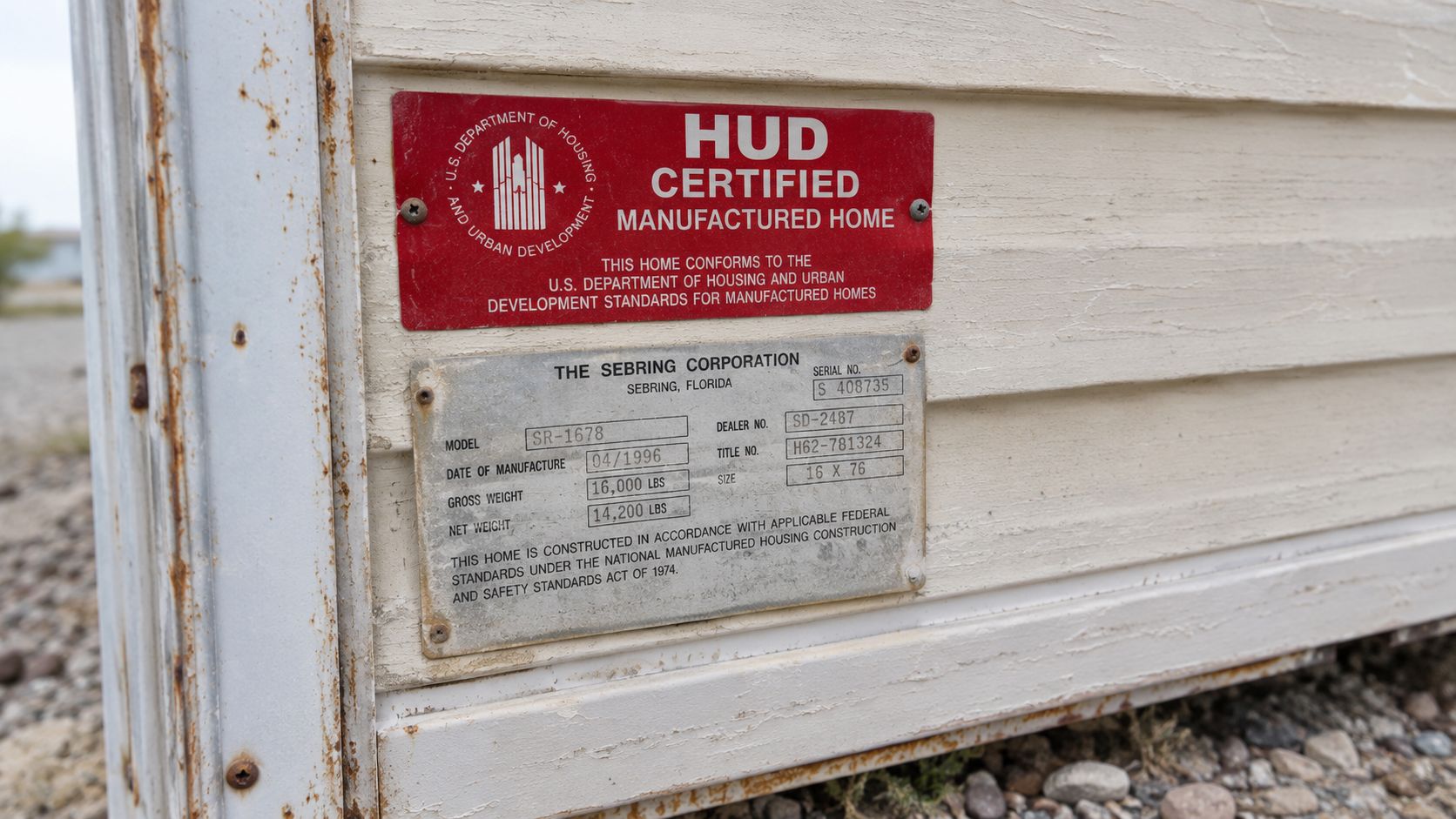
Start with the home's identity. Carriers often ask for the year, make, model, serial number, HUD certification labels, and the data plate. They may also ask whether the title has been surrendered and whether the home is now treated as real property.
That last point can confuse buyers. If the home is attached to land in a way recognized for real-property treatment, some underwriting paths open up that might not fit a home still treated more like titled personal property.
The installation and condition section
Then come the physical details.
Expect questions about single-wide or double-wide, square footage, roof age, roof material, skirting, porches, decks, carports, tie-downs, and foundation type. Piers, blocks, and perimeter support all matter because they help the carrier understand how the home will perform in wind and other weather.
A buyer may think, "It's insured or it isn't." Underwriting doesn't work that way. Each field can move eligibility or pricing.
If you leave roof age blank, the quote may still appear. It may not stay that way once the file is reviewed.
The location and occupancy section
This part gets very New Mexico, very quickly.
The carrier usually wants the physical address, county, occupancy, whether the home is owner-occupied, whether the land is owned or leased, and how close the home is to a fire station or hydrant. It may also ask about visible brush, slope, or wildfire exposure.
Then come the household and use questions. How much personal property do you want covered? What liability limit do you want? Is there a dog? Is there business use in the home? A hair studio in the spare room or inventory stacked in an addition can change the risk picture.
The photos step that slows everything down
Many manufactured-home files need photos before binding. Exterior shots from all four sides are common. Carriers may also want a close photo of the HUD tag and the data plate.
Miss that step, and things stall.
Not forever. Just long enough to throw off a closing date, a move-in, or a lender's binder request.
Carriers That Write Manufactured-Home Risks in New Mexico
Sit at a kitchen table in Otero County with two buyers who own the same size home, and the carrier options may still look different. One home is on owned land outside Alamogordo. The other sits in a leased-space community near Las Cruces. In New Mexico, manufactured-home insurance is not a single shelf of identical policies. It is a smaller set of programs, each with its own rules about home age, location, occupancy, condition, and wildfire exposure.
That is why buyers do better when they ask, "Which type of carrier is open to this risk?" rather than, "Who is the best company?"
The kinds of carriers you will usually run into
One group is standard homeowners carriers that will write some manufactured homes, usually the cleaner files. Those tend to be permanently sited homes on owned land, with fewer condition concerns and fewer red flags in the surrounding property.
Another group is carriers that specialize in manufactured-home programs. They often have broader rules for home type and placement, but broader does not mean automatic approval. A file can still tighten up fast if the county has heavier wildfire pressure, if the home is in a park with lease-related insurance requirements, or if the carrier sees a mismatch between the application and the photos.
A simple way to picture the difference is this. Standard carriers often treat a manufactured home as an exception to their usual book. Specialty manufactured-home carriers treat it as the main thing they insure. That changes how they price, what they ask for, and where they are willing to write.
Why one home fits and another does not
Carrier fit in New Mexico often turns on a few big categories.
A newer home on owned land in Bernalillo or Sandoval County may draw interest from more than one market if the surrounding exposure is moderate. An older home in McKinley, Mora, or parts of Santa Fe County may face more restrictions if brush, slope, distance from fire protection, or prior losses raise concern.
County matters because wildfire maps and rebuilding costs matter. A home near heavier fuels or in a harder-to-serve area can run into higher deductibles, tighter coverage terms, or fewer available programs. That is one reason two buyers with similar homes can get very different results.
Occupancy matters too. Owner-occupied primary homes usually have the widest path. Seasonal use, rental use, or mixed use can narrow it.
Why multi-carrier quoting helps on manufactured homes
Manufactured-home buyers often lose time by filling out one application, waiting, then starting over somewhere else when that first option falls apart. A multi-carrier process shortens that loop because the same base file can be checked against several program rules at once.
That does not remove underwriting. It cuts down the back-and-forth.
For New Mexico buyers, that is especially useful because carrier appetite can shift by county and by home setup. A multi-carrier retrieval process can show early whether the file is heading toward a standard homeowners path, a manufactured-home specialty path, or a much narrower set of options. That helps the buyer fix documentation gaps sooner and get from application to binder with fewer restarts.
There is also a backstop, but it is limited. The New Mexico FAIR Plan is a last-resort option for owners who cannot place coverage in the voluntary market, and it does not work like broad standard-market coverage.
From Quote to Binder and What Changes at Closing
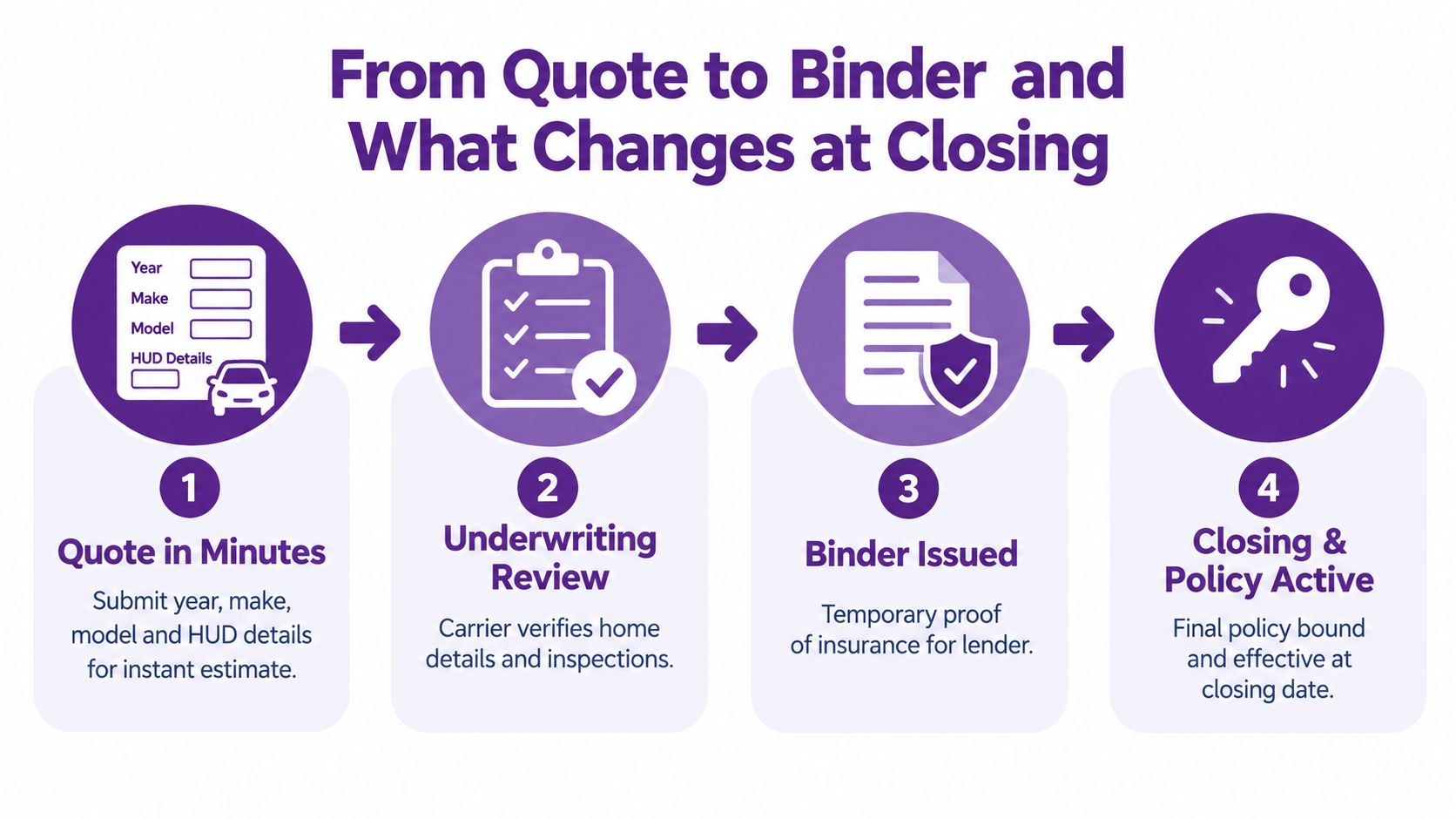
A quote can come back quickly. A binder is the part that has to hold up at closing.
That's where buyers get tripped up.
What happens between the first quote and the binder
A binder, temporary proof of coverage is what a lender, seller, or park office may ask for before closing or move-in. It is not the same as the declarations page. The declarations page is the formal policy document that shows the final named insured, coverage amounts, deductibles, and mortgagee information after binding.
For manufactured homes, the quote-to-binder step often includes photo review, confirmation of tie-down status, and sometimes inspection or added documentation. That's why a buyer can have what looks like a finished quote and still not be ready to close that afternoon.
A service like Maya can pull multi-carrier manufactured-home quotes in parallel from one application and surface side-by-side differences in pricing and coverage terms. For buyers trying to understand how these policies differ, that's often more useful than collecting one-off quotes from separate forms. For a broader look at how manufactured-home insurance works, this guide to manufactured-home insurance is a helpful next read.
What changes if the home is financed
If the home is financed, the lender will care about timing and wording.
For some transactions, the lender mainly wants binder evidence with the correct mortgagee clause. For others, especially when the home is tied into a real-property closing, the declarations page may be required before funding is released. If the legal name of the lender is wrong, or the loan number is missing, the insurance side can hold up an otherwise ready file.
Then there's the effective date. It should match the closing date or move-in date so you don't create a gap before possession starts.
The payment piece buyers forget
The first payment is often collected at binding.
That catches some people off guard. They think the quote reserves the slot. It doesn't. The active policy starts when the binding process is completed and payment terms are satisfied.
What to Check Before You Bind
Before you approve anything, put the quote and the policy terms side by side. Don't compare the monthly payment alone.
Start with the dwelling amount. It should reflect the amount needed to repair or replace the home as written in the policy terms, not just the loan balance, and not the county tax value. Then check personal property, liability, and whether detached items like a shed or carport are included.
The parts that deserve a second look
In wildfire-exposed counties, read the deductible wording carefully. Also check how long loss-of-use coverage lasts and what triggers it. If the home is uninhabitable after a covered loss, you want that section to make sense before you need it.
Look hard at exclusions too. Water backup, ordinance or law, and manufactured-home specific endorsements can change how a claim plays out.
Some of the biggest coverage gaps aren't hidden. They're just in the part most buyers skip because the lender already has the binder.
One last administrative check
Ask the agent to confirm the policy form is approved in New Mexico. Then verify the mortgagee clause matches the lender's exact legal name and loan number.
If price is still your main sorting tool, this article on cheap insurance for manufactured homes can help you compare lower-cost options without missing key coverage details.
And one more thing. A 2026 legislative analysis says Senate Bill 154 would require property insurance for wildfire loss to include related flood damage such as landslides, debris flows, mud flows, and mud slides for five years after a wildfire loss, starting with policies issued July 1, 2026, if enacted, according to the New Mexico SB 154 agency analysis. For now, don't assume your current policy already does that. Ask.
If you're comparing New Mexico home insurance for a manufactured home, Maya can return quotes from multiple carriers through one application so you can see the differences before you get to the binder stage. Maya returns quotes, doesn't bind coverage, and doesn't give coverage advice, the licensed agent owns the placement, so talk to a licensed agent who uses Maya if you want help moving from quote to closing.