

You're at the closing table. The lender wants proof of coverage. The seller is ready. And you've got three insurance quotes for the manufactured home in front of you.
One quote is clearly cheaper.
So you start to lean that way.
Then you notice two lines that don't match the others. The first says the home is covered on an actual cash value basis. That means depreciation is subtracted at claim time, instead of paying what it costs to repair or replace with similar materials. The Wisconsin Office of the Commissioner of Insurance explains that most manufactured home policies are written on an actual cash value basis, while replacement cost pays without deducting depreciation, and the deductible is what you pay before coverage applies (Wisconsin OCI consumer guide).
The second line is shorter, but it matters just as much. Some parts of the property you assumed were included may not be there at all.
Stop there.
That pause is the start of comparing quotes the right way.
A Quick Story About the Cheapest Quote
A buyer once showed me three quotes for a home in a land-lease community. Same address. Same basic premium period. Same move-in date. One price looked like the winner right away.
But the cheap quote wasn't really the same quote.
The buyer had done what most careful people do. They lined up the total premium, looked at the deductible, and checked that liability was present. It looked close enough. Then they read a little deeper and found that the lower price had changed the settlement basis on the home. It was actual cash value, not replacement cost.
For an older manufactured home, that difference can hit hard. Texas regulators give a simple example: on a $10,000 roof loss, a replacement cost policy pays the repair cost minus the deductible, while an actual cash value policy pays less because depreciation reduces the claim payment (Texas Department of Insurance explanation).
The number at the top of the quote is only the start.
The buyer then pulled the same items from each quote and wrote them on one sheet. Settlement basis. Deductible. What structures were covered. What was excluded. Effective date. Personal property limit.
That changed everything.
The cheapest number had been built on thinner coverage, not better pricing.
For manufactured homes, the quiet gaps matter more. Older units, add-ons, and community rules all create room for quote differences that don't show up in the headline premium.
Here's the fix. Get the home facts straight first. Then match the coverage terms. Then put every quote side by side. Then do one last check before you pick.
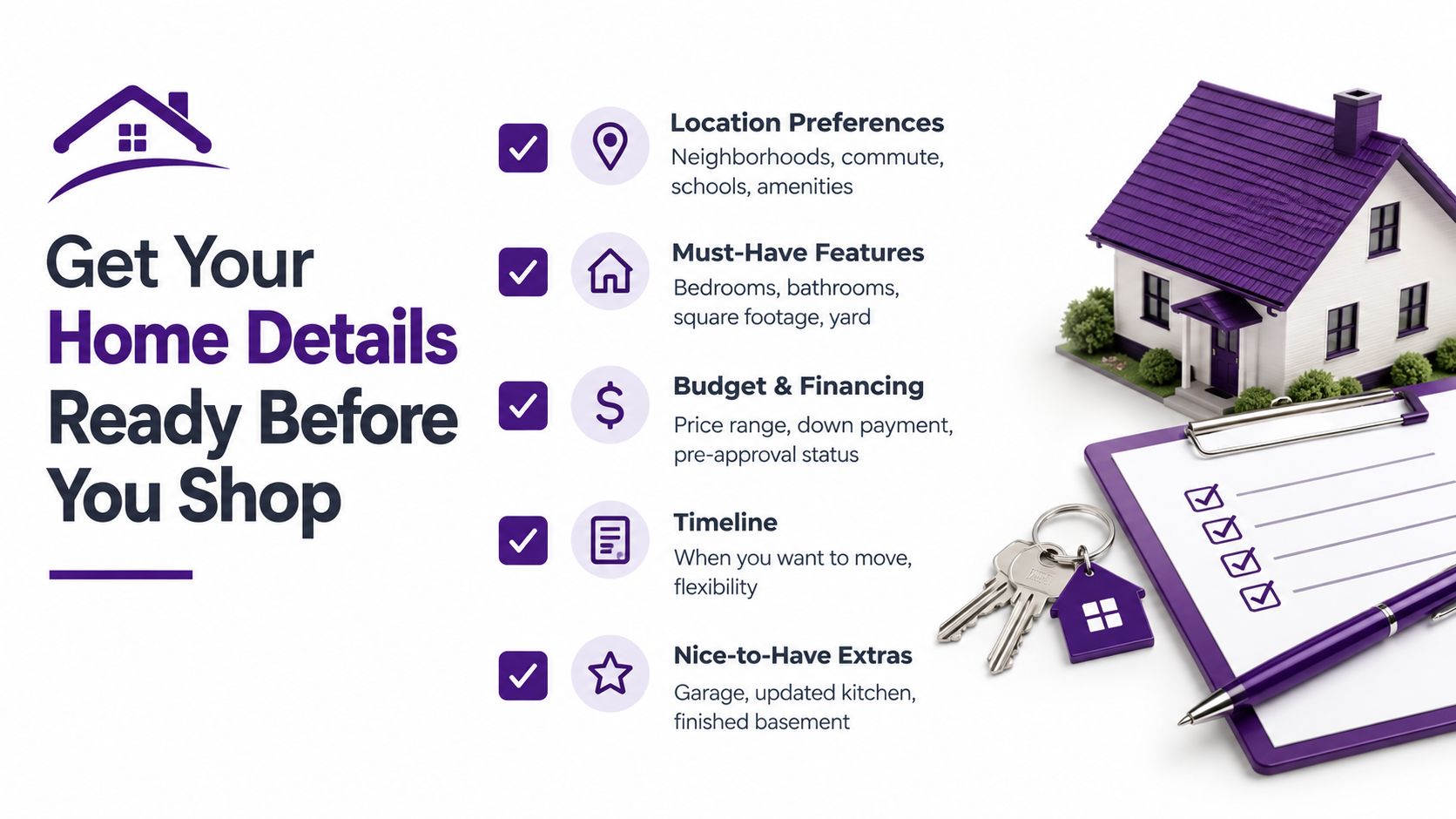
Get Your Home Details Ready Before You Shop
If you want to learn how manufactured home insurance works, start with the facts every carrier needs to quote the same risk the same way.
Start with the home's age and HUD label
For manufactured homes, age isn't a side detail. It can affect eligibility.
For Federal Housing Administration eligibility, a manufactured home must be built after June 15, 1976 and have an affixed HUD seal on each section. Homes built before that date must be rejected with no exceptions, and HUD describes the label as a red 2-inch by 4-inch factory affixed tag (HUD handbook reference).
And HUD also states that all manufactured homes must have an affixed certification label on the outside of the home, with a label on each unit of a multi-wide home (HUD label guidance).
Write down the year of manufacture. Confirm whether the HUD label is present on each section. If the agent asks for label details, don't guess.
Gather the physical details that change the quote
Next, record the home facts that often drift from quote to quote.
Use the same answers every time:
Square footage: Use the same heated living area on every application.
Room count: Bedrooms and bathrooms should match across quotes.
Additions: Covered porches, attached rooms, garages, and carports need to be listed the same way each time.
Site details: Note whether the home sits on owned land or leased land in a community.
Small differences here can change the result. If one quote includes the attached porch and another doesn't, you're not comparing insurance quotes. You're comparing two different homes on paper.
Add loss history and storm-related details
This part gets skipped a lot.
List any prior losses within the last five years if the application asks for them. Also note features that often matter for manufactured homes, such as skirting type, tie-downs, shutters, and roofing updates.
Practical rule: If one quote uses different home facts, throw it out until the facts are corrected.
A fair quote comparison starts before the prices show up. It starts with one clean set of inputs.
The Four Coverage Terms That Actually Matter
A lot of buyers compare premium first and policy language second. For manufactured homes, that order gets people in trouble.
MoneyGeek reports that annual premiums for identical coverage can vary by 452% for poor-credit drivers, with one example ranging from $1,884 to $10,404, a difference of $8,520. The same analysis says even good drivers can see costs range from about $1,100 to $2,600 for the same coverage, which means more than $1,200 in annual savings may be possible by comparing carriers.
That lesson carries over here. Price differences can be real. But they only mean something when the coverage is lined up.
Settlement basis changes the payout
This is the first term I'd check on any manufactured-home quote.
Replacement cost means the amount needed to repair or replace with similar materials, without deducting depreciation. Actual cash value means depreciation is considered when the loss is paid. That distinction matters a lot for older homes, because depreciation can pull the claim payment down.
A cheaper quote may be using actual cash value where another quote uses replacement cost.
And if you don't catch that, the savings can disappear the day you file a claim.
Deductible structure changes what you pay first
A deductible is your share before insurance pays.
But don't stop at the dollar amount. Check whether the deductible is flat or tied to a specific peril. One quote may show one simple deductible. Another may handle wind or hail differently. If you compare only the annual premium, you can miss a much larger out-of-pocket cost later.
Insurafaq's guidance on comparing insurance quotes says a technically sound comparison means matching limits, deductibles, endorsements, term length, and effective date before judging price, then checking quality signals such as AM Best strength and complaint history. It also warns about discount drift, where paperless, autopay, or bundling discounts may disappear at renewal.
That drift matters.
A quote can look cheap today because it assumes discounts that won't stick.
Exclusions on older units need a slow read
Manufactured-home buyers often assume skirting, attached structures, or detached storage are part of the deal.
Sometimes they are. Sometimes they aren't.
Read the exclusions and endorsements line by line. Older-unit wording needs extra attention. If the quote limits roof settlement, excludes certain structures, or changes how parts of the home are valued, write that down in plain language before you compare price.
Personal property limits affect what's inside the home
Your personal property is the stuff you own inside the home.
Furniture. Clothing. Electronics. Kitchen items.
A quote can look complete and still carry a lower personal property limit than the others. If one policy gives much less room for your belongings, that can explain part of the lower premium.
| Coverage Term | What to Compare | Why It Matters at Claim Time |
|---|---|---|
| Settlement basis | Actual cash value or replacement cost | Changes how depreciation affects the payment |
| Deductible | Flat amount, peril-specific terms, applied conditions | Changes what you pay first after a loss |
| Exclusions | Skirting, attached structures, older-unit language | Can remove parts of the property you thought were covered |
| Personal property limit | Total limit and any special caps | Sets how much help you get for damaged belongings |
If you're looking at cheap insurance for manufactured homes, “cheap” needs to be tested. Premium matters. But claim terms matter more.
Maya Builds the Comparison Table for You
Once the quotes come in, the challenge changes.
At that point, you usually do not need more quote files. You need a clean way to understand what each carrier is offering and where the real differences are.
That is where Maya helps.
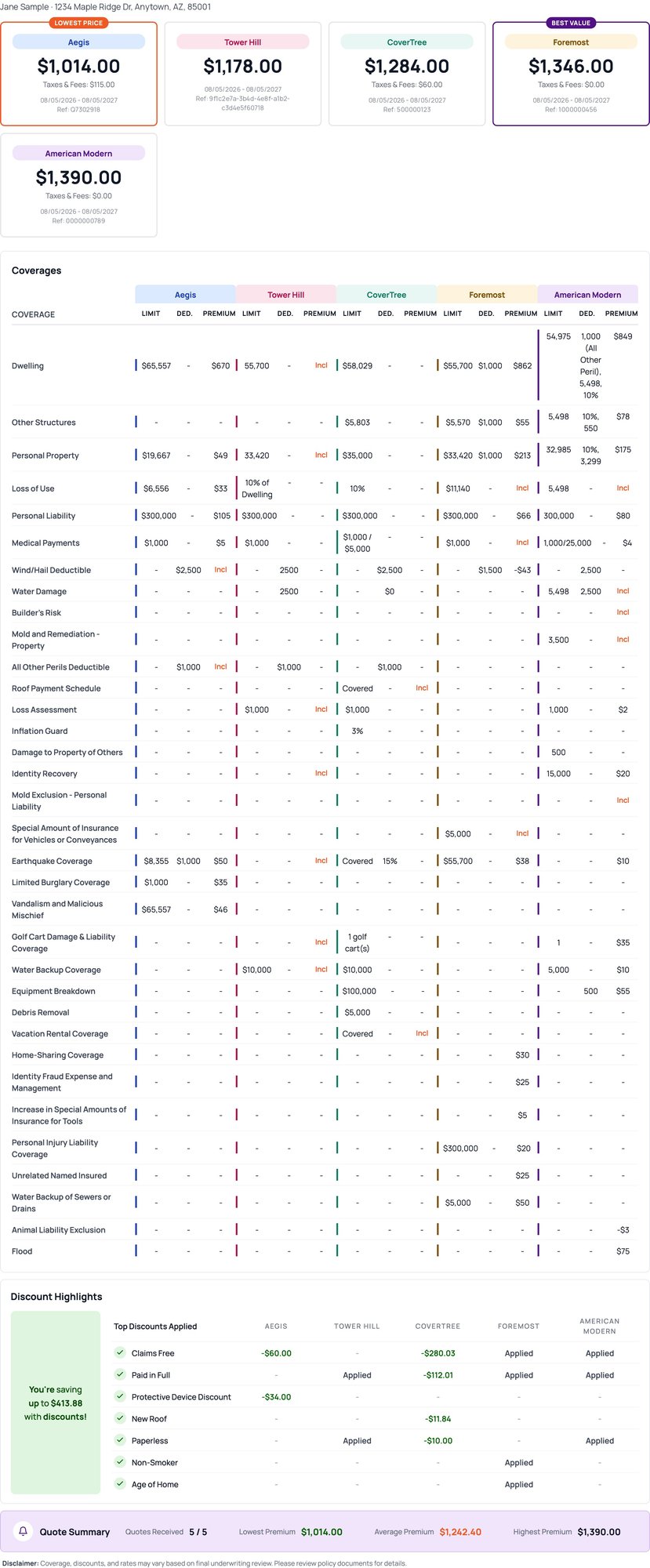
Instead of leaving you with separate documents to sort through on your own, Maya processes the quote data and turns it into a side-by-side comparison table. It keeps the home facts steady and organizes the important policy details so you can review each carrier on equal terms.
What Maya pulls into the comparison
Maya lines up the quote details that matter most when you are deciding which carrier to go with.
| Comparison Item | Why It Matters |
|---|---|
| Annual premium | Shows the total cost, but only in the context of the coverage |
| Deductible amount | Shows what you would pay first before coverage applies |
| Settlement basis | Helps you spot actual cash value versus replacement cost |
| Dwelling coverage limit | Shows how much protection is available for the home itself |
| Personal property limit | Helps you compare coverage for the belongings inside the home |
| Liability limit | Shows how much protection you have if someone is injured or property is damaged |
| Named exclusions | Highlights coverage gaps that could affect a claim |
| Optional endorsements | Shows what extra protections are included or available |
| Applied discounts | Helps explain why one quote may look cheaper than another |
| Effective date | Confirms the quotes are being compared on the right timeline |
| Inspection or photo requirements | Flags extra steps needed before the policy can move forward |
That side-by-side format makes the quotes easier to read because you are not bouncing between PDFs, emails, or agent notes. You can go row by row, compare each coverage term, and see which carrier is offering the stronger fit for your situation.
Why this step matters
This is where small quote differences become visible.
One carrier may look cheaper because the deductible is higher. Another may limit personal property more than you expected. Another may use actual cash value on the home where a different quote uses replacement cost.
Maya helps surface those differences in one place so the decision is based on matched coverage, not just the lowest number.
The point of the comparison table is not just to rank prices. It is to help you understand what you are actually buying from each carrier.
Example of the comparison table Maya returns
Your Final Check Before You Pick a Quote
Before you say yes, run one short verification pass.

Read each quote against the same home facts. Year built. Square footage. HUD label status. Owned land or park placement. If one of those facts changed, the comparison is off.
If you want a cleaner way to compare manufactured-home quotes, visit Maya. Maya returns quotes, does not bind coverage, and does not give coverage advice, the licensed agent owns the placement. Talk to a licensed agent who uses Maya, and bring your worksheet so the final choice is based on matched coverage, not just the lowest number.