

Mobile home insurance cost typically ranges from $700 to $1,500 per year, but it can rise to $2,400 or more because of state weather risks and the home's age. Your final price depends on the home, the location, and the coverage you choose.
You may see that range when you first ask for a quote. Then the number on the screen looks much higher than expected. That doesn't automatically mean the quote is unfair. Manufactured homes follow different pricing rules than many site-built homes, especially in areas exposed to hurricanes, wildfire, hail, or flooding.
The useful question isn't only, “What does mobile home insurance cost?” It's also, “What is driving my quote, and what protection am I getting for it?”
What a Manufactured Home Policy Actually Costs
You buy a manufactured home after reviewing the sale price, lot costs, and financing. Then the insurance quote arrives, and the annual premium is higher than expected, even though the home costs less than nearby site-built houses. Two homes with similar sale prices can receive very different quotes because insurers price the structure, its risks, and its surroundings.
A common national benchmark is $700 to $1,500 annually. NerdWallet cites an industry estimate placing Foremost's average at about $1,267 per year in its overview of mobile home insurance costs.
Those figures provide context, not a promise. A home in a lower-risk area may cost less, while one near a coast or in a wildfire-prone region may cost substantially more. Location can act like a multiplier: it changes how often damage may occur and how expensive repairs are likely to be.
Why a lower home price doesn't guarantee a lower premium
Insurers do not calculate a policy from the purchase price alone. They estimate the cost of a covered loss, including materials, labor, debris removal, and the possibility that severe weather could damage multiple homes nearby.
Manufactured homes can also present different repair and replacement challenges from site-built houses. That affects underwriting, the insurer's process for assessing risk and setting policy terms. The plain-language underwriting glossary explains the term, while this premium glossary describes how insurers use “premium” for the amount you pay.
A quote may look high even when the dwelling limit is lower than that of a nearby site-built home. Consumer Reports gave a Houston example in which $100,000 of manufactured-home coverage cost $2,474, while a traditional Texas home with $250,000 of coverage averaged $1,967. The comparison shows why you cannot judge a policy by its limit alone. Construction type, repair conditions, and local risk all shape the result. See the Consumer Reports comparison of manufactured-home insurance costs for that example and additional state context.
Practical rule: A quote is only “cheap” or “expensive” after you compare its deductible, coverage basis, exclusions, and dwelling limit.
What the number should tell you
A premium near the national benchmark may be reasonable for a newer home in a moderate-risk location. A much higher quote calls for examination rather than immediate rejection. It may reflect wind exposure, an older roof, a higher replacement limit, or a deductible that changes your costs after a loss.
A surprisingly low quote also needs review. It might use actual cash value, which subtracts depreciation, instead of replacement cost. It may exclude a peril you assumed was covered.
The premium is the entry price to a contract. The coverage details determine what that price buys.
What Underwriters Actually Look At
The purchase price tells an insurer only part of the story. Underwriters focus on how likely a loss is and how difficult it would be to repair the home.
A roof is a good example. A remodeled kitchen may improve your daily life, but a roof's age and material tell the insurer more about exposure to wind and water. Square footage matters because a larger home generally needs more materials and labor after a loss. Local repair costs matter too, so the same home can receive different quotes in different ZIP codes.
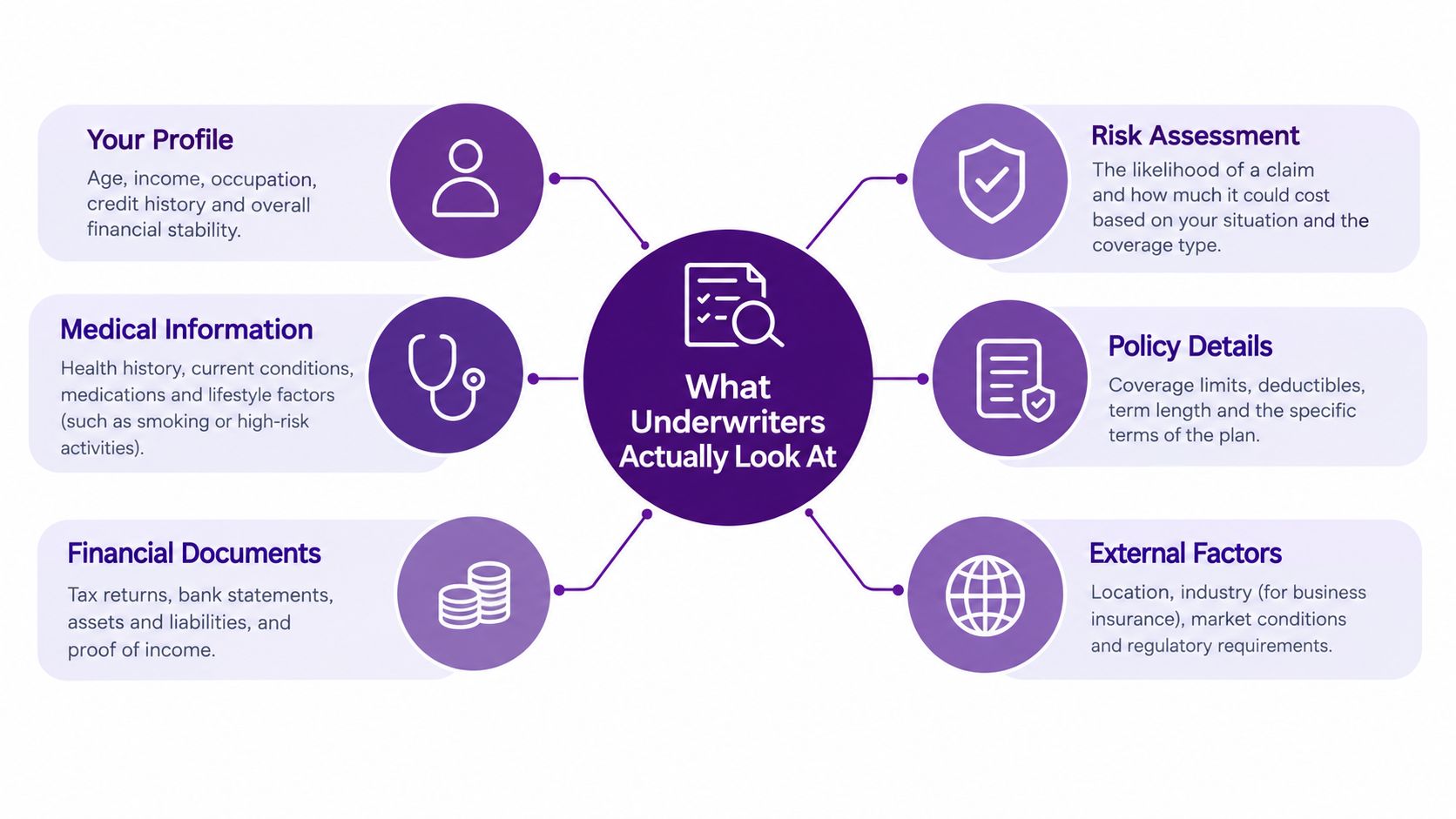
The details that shape your quote
Insurer guidance identifies several factors that commonly affect mobile home insurance cost:
Location and weather exposure: Areas facing wind, storms, wildfire, or flooding generally carry more risk.
Home age and condition: Older or poorly maintained homes may cost more to insure.
Roof age and material: The roof is a first line of defense against weather.
Square footage: More living area can mean more materials and labor after damage.
Coverage limits: Higher limits can raise the premium.
Deductible: A deductible is the amount you pay before insurance contributes.
This list comes from Liberty Mutual's mobile home insurance guidance, which discusses the main rating factors without reducing the quote to one simple formula.
Your home also needs accurate identifying details. The build year, size, roof information, construction type, and installation features should match the application. A wrong answer can create rework before the policy is issued or confusion during a claim.
Structural details have financial meaning
Anchoring is another factor. An industry guide cited by Allstate explains that manufactured homes need approved tie-down systems. It distinguishes single-wide homes, which need diagonal and vertical ties, from doublewide homes, which require diagonal ties. Those physical details help insurers judge how the home may respond to strong wind.
HUD materials also state that manufactured homes must have an affixed HUD seal, with a seal on each section of a multi-wide unit. The seal helps identify compliance with the applicable manufactured-home standard.
The point isn't that a seal or tie-down automatically earns a discount. No single feature guarantees a lower premium. It gives the insurer information about construction and installation risk.
A stronger structure can help the quote, but the carrier still evaluates the whole property.
How Location and Age Change the Math
Two homes can look nearly identical and receive very different quotes. Put one in Hawaii and another in Tennessee, and the location alone may create a large difference. Put an older unit in a storm-prone area, and availability can become part of the pricing problem.
State averages illustrate the spread. Consumer Reports reports annual manufactured-home insurance averages as low as $502 in Hawaii and as high as $1,489 in Tennessee. It also reports that Oklahoma, Kansas, Texas, Louisiana, and Arkansas average more than $1,200 per year. These are historical averages, not a quote for your address.
State exposure changes the starting point
| State | Estimated annual cost | Primary risk factor |
|---|---|---|
| Hawaii | $502 | State-specific exposure and market conditions |
| Tennessee | $1,489 | Location and weather risk |
| Oklahoma | Over $1,200 average | Severe weather exposure |
| Kansas | Over $1,200 average | Severe weather exposure |
| Texas | Over $1,200 average | Wind, storm, and repair-cost exposure |
| Louisiana | Over $1,200 average | Coastal and storm exposure |
| Arkansas | Over $1,200 average | Severe weather exposure |
The exact ZIP code still matters. MarketWatch notes that Texas manufactured homes can cost more to insure than homes in landlocked states because hurricane risk and repair costs are higher. Insurers may also account for local materials and labor costs, as explained in its mobile home insurance pricing overview.
A foundation can matter too, but it doesn't erase local weather exposure. Different foundation arrangements affect installation and structural questions, which is why your agent may ask for detailed information about the home's support system. This guide to manufactured-home foundation types can help you identify what you have before requesting quotes.
Age changes both price and access
The 1976 dividing line matters. Homes built before 1976 are classified differently from manufactured homes built under the later HUD standards. Older units may have more limited access to standard insurance markets because their construction, condition, and repair needs can be harder for carriers to evaluate.
Age isn't the only issue. A well-maintained older home may present a better risk than a neglected newer one. Still, insurers commonly review age, condition, prior claims, and size together. The question may shift from “What premium can I afford?” to “Which insurers will consider this home?”
CNBC's coverage review describes recent typical ranges of about $750 to $2,400 per year, with Texas, California, and Florida sometimes running around $1,500 to $2,700 annually. Those figures reinforce a basic point: an average becomes less useful as weather exposure and home-specific underwriting become more severe. Read its mobile and manufactured home insurance cost discussion for that broader range.
Practical Ways to Lower Your Premium
Start with the facts on your application. An insurer can't give proper credit for a sound installation if you don't know the tie-down type, roof material, or condition details.
Ask a licensed agent to review the quote rather than changing coverage blindly. A lower premium can leave you with a larger bill after a loss.
Fix the details before changing the policy
Check the home's build year, square footage, roof age, and roof material. Confirm that the application reflects the actual home, not an estimate from a listing. Errors can produce the wrong price or delay placement.
Then ask about the installation. Find out whether the home has approved anchoring and whether the HUD seals are present. Keep records or photographs available if the agent or carrier requests documentation.

Adjust your share of the risk carefully
A deductible is your part of a covered loss. Raising it may lower the premium, but only choose an amount you could pay after a storm or other serious event. Ask how wind or named-storm deductibles work in your policy, because they may not match the ordinary all-peril deductible.
Review the dwelling limit as well. Insuring the home for too little can create a serious gap after a total loss. The premium may look attractive, but the policy may not provide enough money to repair or replace the structure.
Coverage check: Lower the price by changing risk you can afford, not by removing protection you may need.
Bundling with another policy may help in some situations, but don't assume a discount applies. Ask the agent to show the premium with and without the change. Compare the total cost and the coverage terms.
Weather features can also deserve attention. Better anchoring, a sound roof, and proper installation may improve the risk profile. They won't guarantee savings, and the carrier decides how those details affect the quote.
Compare the result, not just the premium
Request at least two quotes when possible. Compare the deductible, dwelling limit, personal property limit, liability coverage, and covered perils. Read exclusions for wind, flood, water damage, and other risks that matter in your area.
A policy that costs less but removes a major peril may not be a useful bargain. The goal is a price you can carry with protection that matches the home and location.
The Truth About Insuring Older Homes
An older manufactured home isn't automatically uninsurable. It may be more difficult to place, and the available policy may have different terms, but price and availability aren't the same question.
A carrier may decline a home because of age, condition, prior claims, or location. Another carrier may consider it with a higher premium, a larger deductible, or actual cash value coverage. 
Read the settlement language
Replacement cost means the policy may pay the cost to repair or replace covered property without subtracting ordinary depreciation, subject to the policy terms and limits. Actual cash value means the insurer subtracts depreciation when calculating the payment.
That difference matters most after a major loss. An older home may have a lower actual cash value than the amount needed to buy and install a comparable replacement. A lower premium can come with that tradeoff.
Ask the agent directly:
Is the dwelling covered on replacement cost or actual cash value?
What deductible applies to wind or storm damage?
Are there exclusions that affect the home's main weather risks?
Does the limit reflect current replacement conditions?
Don't assume a renewal keeps the same settlement basis. Read the declarations and policy documents each time they change.
Older homes need accurate expectations
Specialized markets may consider homes that standard carriers won't. The terms may be narrower, and the premium may be higher. A licensed agent can tell you what is available for your home's age, condition, and location.
You may also need information that isn't easy to find, such as the HUD label, roof details, or anchoring records. Gather those facts before shopping. It gives the agent a clearer submission and reduces avoidable delays.
Comparing Quotes and Securing Coverage
A single quote gives you a price, not a market comparison. Manufactured-home insurers may weigh roof age, anchoring, weather exposure, and settlement terms differently. Side-by-side quotes help you see those differences.
Start with the same information for every quote. Use the same dwelling limit, personal property limit, liability limit, and deductible where possible. Otherwise, the cheapest result may offer less protection.
Check the parts behind the price
Look beyond the annual premium. Compare:
The ordinary deductible and any wind or storm deductible.
Replacement cost or actual cash value.
Wind, hail, flood, and water exclusions.
Coverage for attached structures and personal belongings.
Requirements for tie-downs, inspections, or repairs.
Your home may also be treated as personal property or real property depending on the ownership and installation arrangement. Tell the agent how the home is titled and whether you own the land. That information can affect the policy setup.
Before you get to the stage of comparing costs and choosing a policy, start with Maya. Maya is an online quote comparison platform for manufactured-home insurance. It lets you enter your home details once, retrieve quotes from participating carriers, and review premiums, deductibles, and coverage terms side by side. That gives you a clearer starting point before you decide which policy is worth a closer look.
Maya helps at the front of the process, when you are trying to understand what coverage options and price ranges are actually available for your home. It does not replace the licensed professional who reviews your policy options with you. After you receive quotes through Maya, speak with a licensed agent who understands manufactured homes and your state's weather risks. Maya returns quotes, does not bind coverage, and does not give coverage advice; the licensed agent handles placement and final coverage questions.
If you are just starting your search, Maya can help you get quotes before you begin weighing mobile home insurance cost against coverage terms. Visit Maya to start with your home details, then take the returned quotes to a licensed agent for coverage questions and binding.