
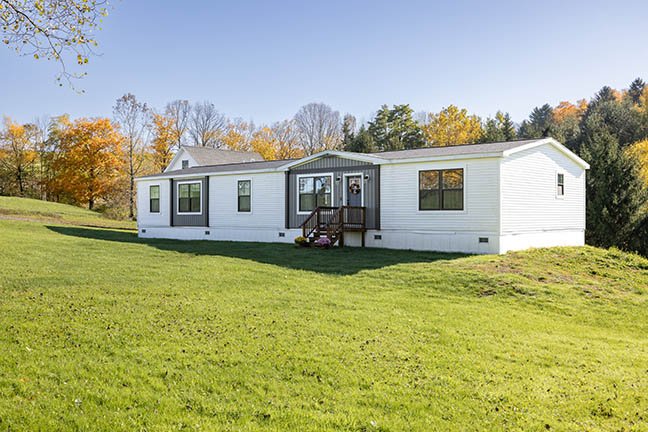
Manufactured home insurance in New Mexico is still available through standard carriers, but hail and wildfire losses have pushed prices higher and made some homes harder to place. If a standard insurer declines the risk, the state's FAIR Plan can serve as a backstop for owner- and tenant-occupied mobile homes.
This guide explains what these policies usually cover, why New Mexico losses affect price and availability, how age and HUD labels affect eligibility, and what to do if the standard market says no.
A New Mexico Storm and What It Does to Coverage
After a spring storm in eastern Bernalillo County, damage may show up fast. Hail can bruise shingles, wind can tear screens loose, and water can slip behind siding or roof materials.
The claim is only part of the story. Insurers also review the home's age, condition, prior losses, roof, tie-downs, and location. Manufactured homes are underwritten differently from site-built houses because their construction and setup vary more.
New Mexico has a much larger share of manufactured housing than the country overall. Manufactured homes make up about 15% to 16% of the state's housing stock, compared with roughly 5% to 6% nationally, and they account for more than 30% of housing stock in 11 counties, according to a New Mexico legislative housing briefing. Valencia County stands out, with mobile and manufactured homes representing 30.2% of occupied housing, or about 9,410 units, compared with a state average of 16.3% and a national average of 5.6%, according to the same document.
That larger footprint means more homes are exposed to the hail, wildfire, and wind risks that carriers are pricing.
What Manufactured Home Insurance in New Mexico Actually Covers
A manufactured-home policy is built for factory-built housing. It is not the same as a standard homeowners form, even when the protections look similar.
Most policies can include:
- Dwelling coverage for the home itself
- Other structures for a detached shed or carport
- Personal property for belongings inside the home
- Liability coverage for certain injury or property-damage claims
- Additional living expenses if a covered loss makes the home temporarily unlivable, but only when included
Many policies use named perils, which means the policy lists the causes of loss it covers, such as fire, wind, hail, theft, vandalism, or explosion.
Settlement matters too. Replacement cost pays based on the cost to replace covered property without deducting normal depreciation, subject to policy terms. Actual cash value subtracts depreciation. Older homes are more likely to be insured on an actual-cash-value basis or face tighter limits.
For general answers about quote information and policy comparisons, see the Maya manufactured-home insurance FAQ.
Standard Coverage Parts of a New Mexico Manufactured Home Policy
| Coverage Part | What It Pays For | Common NM Limit Example |
|---|---|---|
| Dwelling | Covered damage to the home | Set by the policy |
| Other structures | Covered damage to a shed or carport | Set by the policy |
| Personal property | Covered belongings inside the home | Set by the policy |
| Liability | Covered injury or property-damage claims | Set by the policy |
| Additional living expenses | Certain added living costs after a covered loss | Available only if included |
Flood damage is usually separate. Always read exclusions and endorsements instead of assuming every policy works the same way.
Hail, Wildfire, and the New Mexico Loss Environment
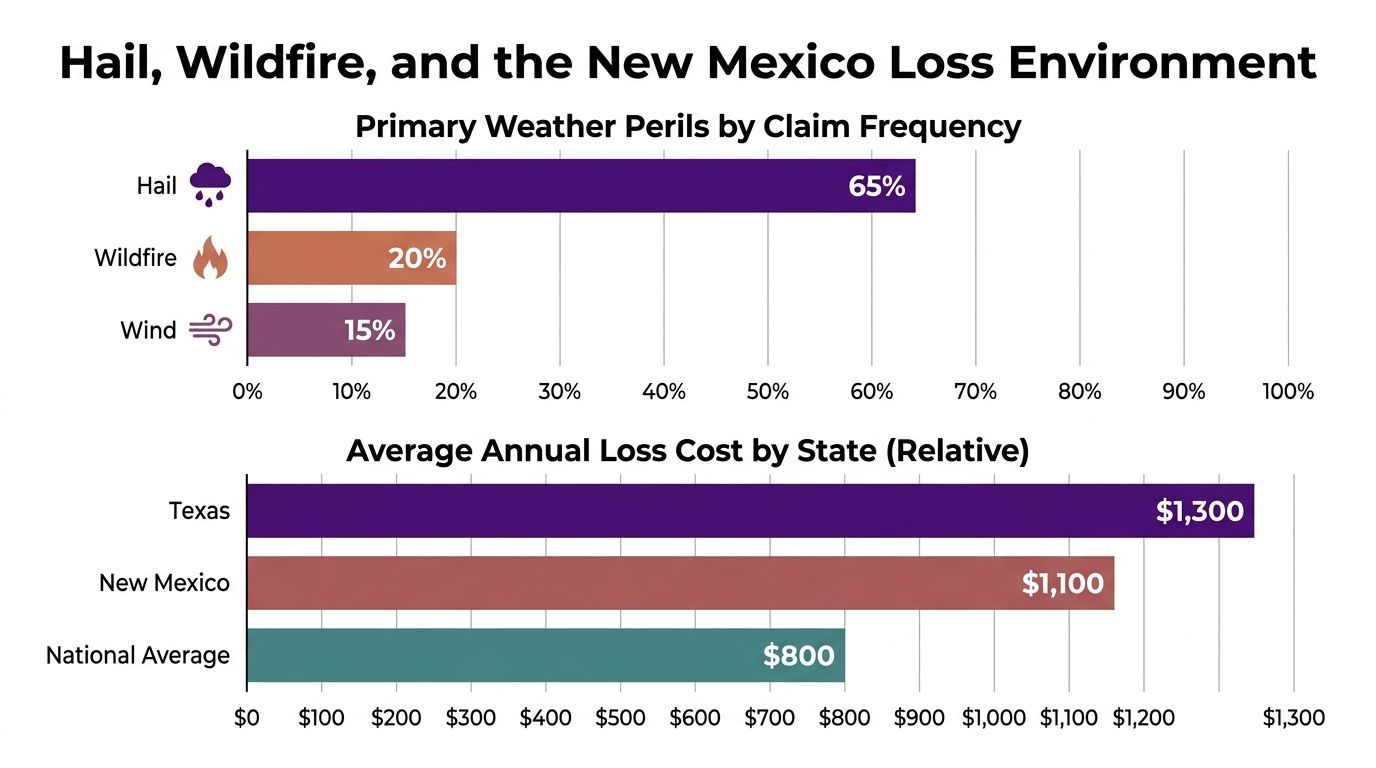
New Mexico's property-insurance market has faced serious loss pressure from hail and wildfire. The New Mexico Property Insurance Program reported three assessments during the previous two years to cover significant hail and wildfire losses in its 2025 FAIR Plan briefing.
For homeowners, that can mean higher premiums, stricter inspections, and wind or hail deductibles that deserve close review.
Wildfire risk is reviewed differently. Carriers may look closely at nearby vegetation, access roads, roof material, skirting condition, spacing, and maintenance.
A New Mexico legislative analysis also reported average household premiums of $1,817 in 2023, a 16% increase from 2020, with county-level increases ranging from 7.3% to 47.4%. These are broad household figures, not a promise about any one manufactured-home premium, but they help explain the pricing climate.
The same 2025 briefing says the FAIR Plan's residential coverage limit was reduced to $350,000 after a temporary increase to $750,000 from June 1 to June 20, 2025. The program specifically writes owner- and tenant-occupied mobile homes.
Repeated local losses can also make a carrier decline a new application or nonrenew an existing policy. That does not always end your options, but it can change where you need to shop.
Age, HUD Labels, and How Title Affects the Quote
Three details often decide whether an agent can get a workable quote: the construction date, the HUD certification labels, and the title status.
Homes built before June 15, 1976 predate federal manufactured-housing standards. HUD guidance says those homes are not eligible for Federal Housing Administration insurance. They may also face tougher underwriting because they do not meet later HUD standards, according to the New Mexico administrative rule on manufactured-home standards.
A HUD certification label is the red metal tag attached to each transportable section. Multi-wide homes need a label on every section. Missing labels can create major quote problems.
Title status affects financing
For FHA-backed financing in New Mexico, both the home and land must be classified as real estate. Housing New Mexico says the file must include the county assessor's statement showing real-property assessment, a tax release from the county treasurer or assessor, and a deactivated title with the vehicle identification number clearly readable, as described in its manufactured-home financing overview.
Personal-property title and real-property classification can lead to different financing paths. Confirm the required records with the county and lender before you rely on a quote or set a closing date.
Buyers and sellers can also review Maya's manufactured-home dealership resources when insurance documentation is part of a purchase process.
When the Standard Market Says No and the FAIR Plan Steps In
The standard market is usually the best place to start. It may offer broader protection and a better fit for lender requirements. But some carriers will decline older homes, loss-heavy properties, or locations they no longer want to write.
New Mexico's FAIR Plan is the residual market for hard-to-place property. State rules include real property and mobile homes, and the program writes owner-occupied and tenant-occupied mobile homes. All licensed property insurers in New Mexico must belong to the FAIR Plan structure, according to the New Mexico insurance rule.
The FAIR Plan is a backstop, not a simple substitute for a standard policy. Review its coverage and limits carefully.
| Feature | Standard Market | NM FAIR Plan |
|---|---|---|
| Availability | Depends on carrier appetite and underwriting | Designed for hard-to-place risks |
| Mobile homes | May be written when the carrier accepts the home | Specifically includes owner- and tenant-occupied mobile homes |
| Coverage scope | Varies by policy and endorsements | More limited form may apply |
| Liability | May be included | Don't assume it is included |
| Personal property | May be included | Don't assume it is included |
| Pricing | Voluntary-market pricing | Can be higher because it serves difficult risks |
| Coverage limit | Set by insurer and policy | Residential limit reported at $350,000 in the 2025 briefing |
A creditor-placed policy can add confusion. New Mexico rules say creditor-placed coverage for mobile homes may not be broader than a basic fire and extended-coverage policy. It may protect the lender's interest without fully protecting your belongings or liability.
Getting Accurate Quotes Without the Runaround
A strong quote starts with accurate property details. Before calling an agent, gather:
- Year built
- Serial number
- Square footage and bedroom count
- Roof age and material
- HUD data plate and section labels
- Foundation, tie-down, and skirting details
- Whether the home is on leased land or owned land
- Title status
- Prior claims history
If wildfire exposure is an issue, include photos of defensible-space work around the home.
You can request quotes from manufactured-home programs such as Foremost and American Modern, then compare more than price. Ask whether the structure settles at actual cash value or replacement cost, and how wind and hail deductibles apply.
Maya can retrieve quotes from multiple participating carriers through one application and display premiums, deductibles, and coverage terms side by side. It does not replace a licensed agent's review, but it can reduce repeated entry of the same property information. You can also review Maya's resources for insurance agents if an agent is helping with the application.
Pulling It Together and Your Next Step
The key points are simple. Hail and wildfire affect both price and availability. The home's age and HUD labels affect eligibility. Title status can affect financing, especially when a lender needs the home and land treated as real estate.
Standard carriers may work. If they do not, New Mexico's FAIR Plan specifically includes owner- and tenant-occupied mobile homes as a residual-market option. Just compare the terms carefully before choosing it.
Collect your roof age, tie-down information, HUD records, title status, land details, and recent loss history. Then request quotes from at least two standard-market sources that know manufactured homes, and ask whether FAIR Plan coverage should also be considered. Check the deductible and settlement method, not just the premium.
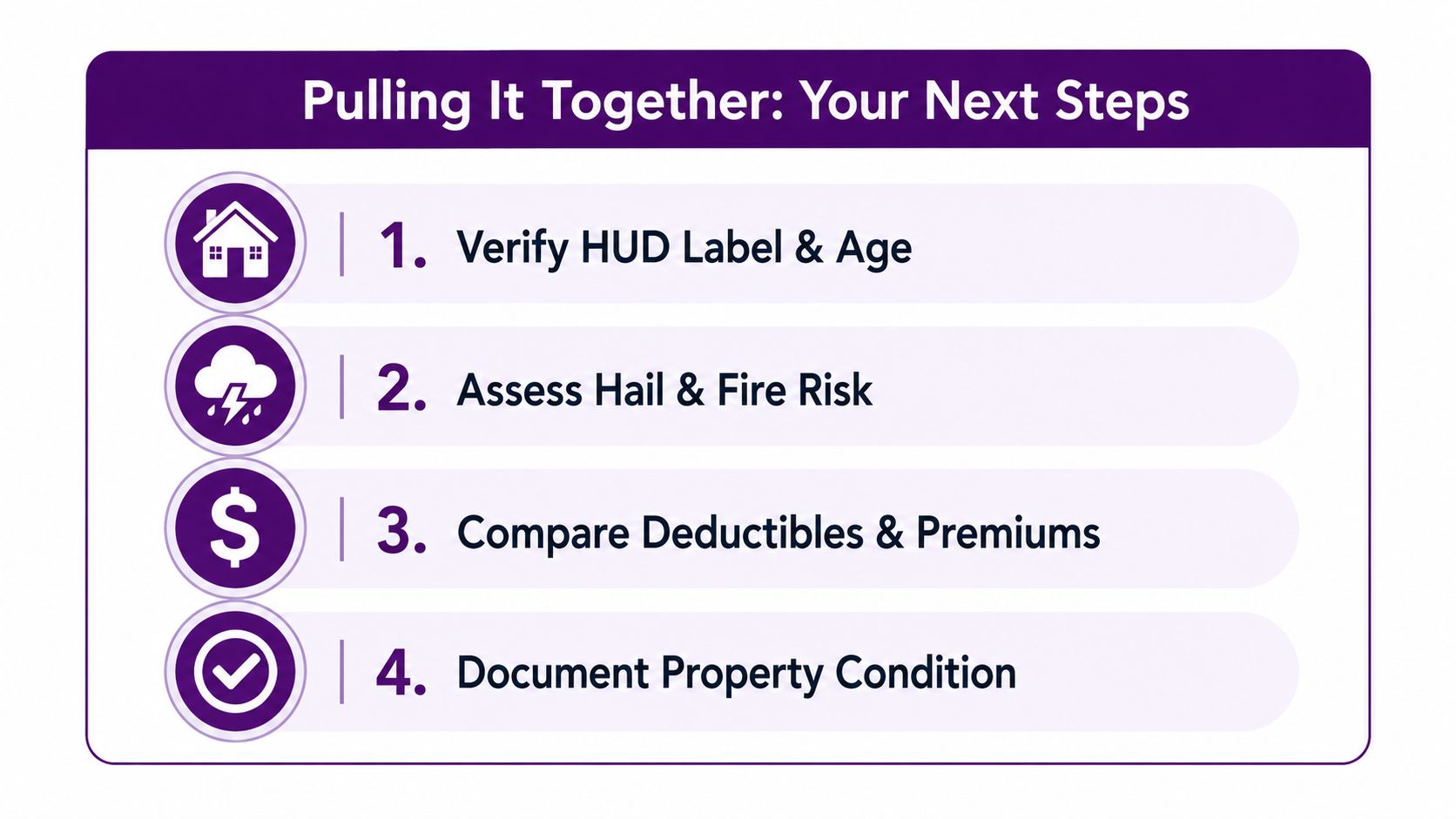
After you gather the key details this guide covers, such as roof age, tie-downs, HUD labels, title status, land setup, and recent losses, Maya can help you compare real quote options side by side before a licensed agent reviews the policy and completes the placement.
Maya can help you compare manufactured-home quotes using the property details you gather, including deductibles and coverage terms. Use the results to speak with a licensed agent and verify the home's title and HUD records before closing.